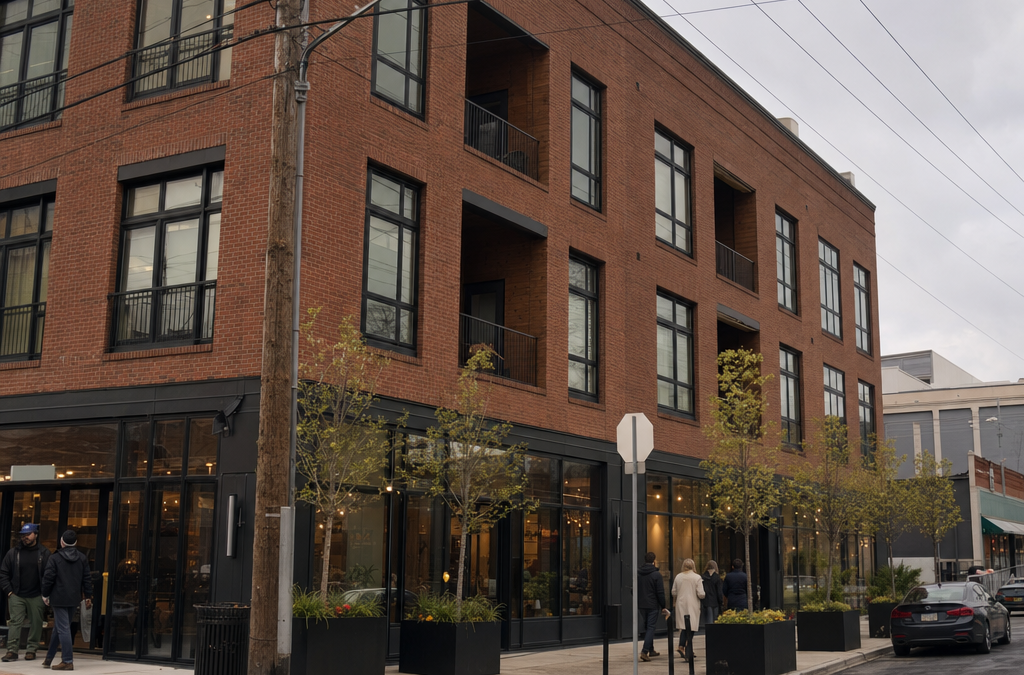
Philadelphia’s retail market is demonstrating a robust recovery, with activity now extending beyond its traditional core into surrounding residential neighborhoods, as recently highlighted by Bisnow. This expansion offers a valuable lens through which to consider the resilience and evolution of urban retail dynamics, particularly as commercial real estate professionals evaluate similar patterns in Baltimore.
What it is
Philadelphia’s retail sector is experiencing a significant resurgence, with Center City’s Rittenhouse area leading the way in post-pandemic recovery. Retail occupancy in Center City, which dropped significantly in 2020, has climbed back to 84% as of April, reaching a two-year high. West Walnut Street, in particular, shows strong performance with occupancy rates exceeding 88% between 15th and 18th streets.
Major retailers are expanding, exemplified by Lululemon nearly doubling its footprint on Walnut Street. New establishments like Jordan World of Flight’s flagship store and Juice Pod have also opened. This momentum is now spilling onto adjacent streets like Chestnut Street and into rapidly growing residential neighborhoods such as Northern Liberties, which saw substantial multifamily development recently. This influx of new residents is driving demand for a wider array of retail and services, attracting tenants like Madis Coffee and Core Power Yoga to areas previously less considered. Originally reported by Bisnow.
Why it matters in Baltimore
For those of us tracking the commercial real estate landscape, observing how major East Coast markets like Philadelphia navigate retail trends helps provide valuable context for dynamics here in Baltimore. Philadelphia’s experience, where a strong urban core sees retail activity extend into dense residential areas, mirrors questions and opportunities we see in our own market. Baltimore’s urban core and surrounding neighborhoods are continually evolving, shaped by new residential developments and shifting consumer preferences.
Just as Northern Liberties’ multifamily boom influenced its retail sector, Baltimore neighborhoods with recent residential growth present similar opportunities. Understanding how demand for specific retail types, from lifestyle brands to essential services, follows population shifts is crucial. This helps professionals assess potential acquisition or leasing needs across various property types, whether it’s for new retail ventures, flex spaces accommodating retail components, or mixed-use developments.
The recovery of a major city’s core retail also signals broader economic confidence that can influence investment decisions across asset classes. For commercial real estate owners and tenants in Baltimore, these trends underscore the importance of robust analysis. It’s about understanding the specific criteria and requirements that define a market’s needs, often referred to as a
If you’re weighing a move, expansion, or disposition in Baltimore, Tim Gardner can walk you through what comps and absorption look like on the ground. Reach out – no pitch, just a conversation.